Japanese Job Titles on Business Cards, Explained
What Japanese job titles such as shacho, bucho, kacho and shunin mean, how they usually rank, how to address people who hold them, and how English translations vary.
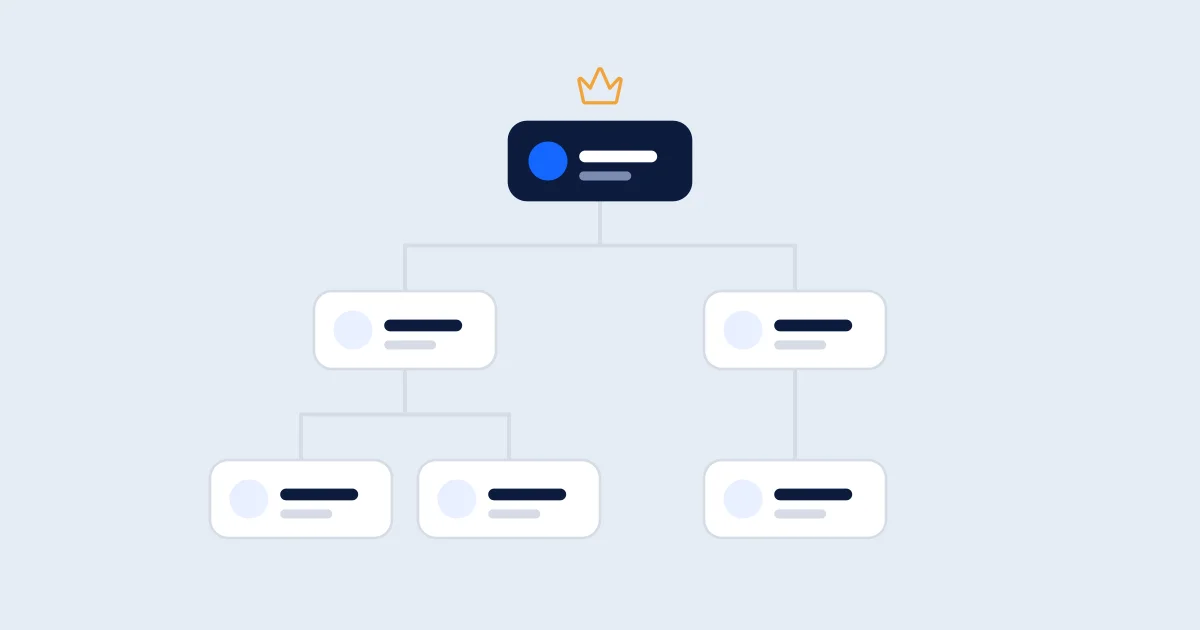
Common Japanese job titles on business cards are 社長 (shachō, president), and within a department, in their usual order from senior to junior: 部長 (buchō, department manager), 課長 (kachō, section manager), 係長 (kakarichō, team leader) and 主任 (shunin, senior staff). The order is common across Japanese companies, but each company defines its own titles, so the authority behind a title varies. This guide explains each title, how to address people who hold them, and why the English side of a card may not match.
How do Japanese job titles rank?
Titles on Japanese business cards fall into two groups: company leadership and governance titles, and management titles inside departments. The English equivalents below are approximate; a business card alone does not tell you someone’s legal authority or signing power.
Company leadership and governance
These titles do not form one fixed ladder, and one person can hold several of them.
| Title | Reading | Rough English equivalent | Notes |
|---|---|---|---|
| 会長 | kaichō | Chairman | Often a former president |
| 社長 | shachō | President | Often written 代表取締役社長 |
| 代表取締役 | daihyō torishimariyaku | Representative director | The director who can represent the company; often, but not always, the president |
| 専務 / 常務 | senmu / jōmu | Senior / managing executive | Usually combined with 取締役 |
| 取締役 | torishimariyaku | Director (board member) | Not every director runs a business unit |
| 執行役員 | shikkō yakuin | Executive officer | Separate from 取締役, though one person can be both |
Management inside departments
This group has a clearer order. From senior to junior, as commonly structured:
| Title | Reading | Rough English equivalent | Notes |
|---|---|---|---|
| 本部長 | honbuchō | Division head | Runs a division (本部) with several departments |
| 部長 | buchō | Department manager, general manager | Runs a department (部) |
| 次長 | jichō | Deputy department manager | Not every company has this role |
| 課長 | kachō | Section manager | Runs a section (課) within a department |
| 係長 | kakarichō | Team leader, supervisor | Runs a team (係) within a section |
| 主任 | shunin | Senior staff | Role varies; often not yet a manager |
Someone without a management title may have 担当 (tantō, “in charge of”) next to their area of work, or just the department name. Titles ending in 代理 (dairi) or 補佐 (hosa), such as 課長代理 or 部長補佐, are usually deputy or assistant roles below that manager (in some companies 課長代理 is a standing rank, not a temporary stand-in); the exact scope depends on the company.
Reading the department next to the title
Departments are usually listed from large to small, followed by the title:
- 本部 (honbu): division
- 部 (bu): department
- 課 (ka): section
- 係 (kakari): team
- 室 (shitsu): office (as in 社長室, the president’s office)
So 「営業本部 海外営業部 課長」 reads as “Section Manager, Overseas Sales Department, Sales Division”. Our guide on how to read a Japanese business card covers the other lines on a card, such as the company name, address and phone numbers.
How to address someone with a Japanese title
In conversation
In conversation, family name + さん (Yamada-san) is widely used with people from other companies. Inside Japanese companies, colleagues often address managers by family name + title (山田部長, Yamada-buchō) or by the title alone (部長). In a formal first meeting, or when you are unsure, follow how the person introducing you, or your own Japanese colleagues, address them.
In emails
In a Japanese email to a client, the opening usually lists the company, department, title, then the name followed by 様 (sama):
株式会社サンプル物産
海外営業部 課長 山田太郎様
Many Japanese readers consider 「山田課長様」 (title + sama) redundant, so put the title before the name as above, or simply write 「山田様」. In English emails, “Dear Mr. Yamada” or “Dear Ms. Sato” works fine.
Why the English side may not match
Many Japanese cards carry an English side, but companies translate titles differently. 部長 might appear as “General Manager”, “Department Manager” or “Director”; 課長 as “Manager” or “Section Manager”. A few things to keep in mind:
- “Director” on the English side may mean a board member (取締役) or a department head, depending on the company. Check the Japanese side.
- “Manager” can be a 課長 at one company and a 部長 at another.
- “General Manager” is used for both 本部長 and 部長.
Use the Japanese title as a clue to seniority, and the English side to see the company’s preferred English wording for that person’s role.
Who decides? What titles tell you, and what they don’t
| What you want to know | What the title tells you | What to do |
|---|---|---|
| Who your day-to-day contact is | 担当, 主任 and 係長 are often the people who handle your requests directly | Keep them in the loop on every exchange |
| Who manages the team | 課長 and 部長 usually manage people and budgets for their area | Copy them on important proposals if your contact suggests it |
| Who signs contracts | Not something a title reliably shows | Ask your contact who approves and signs |
Keeping Japanese contacts organized by seniority
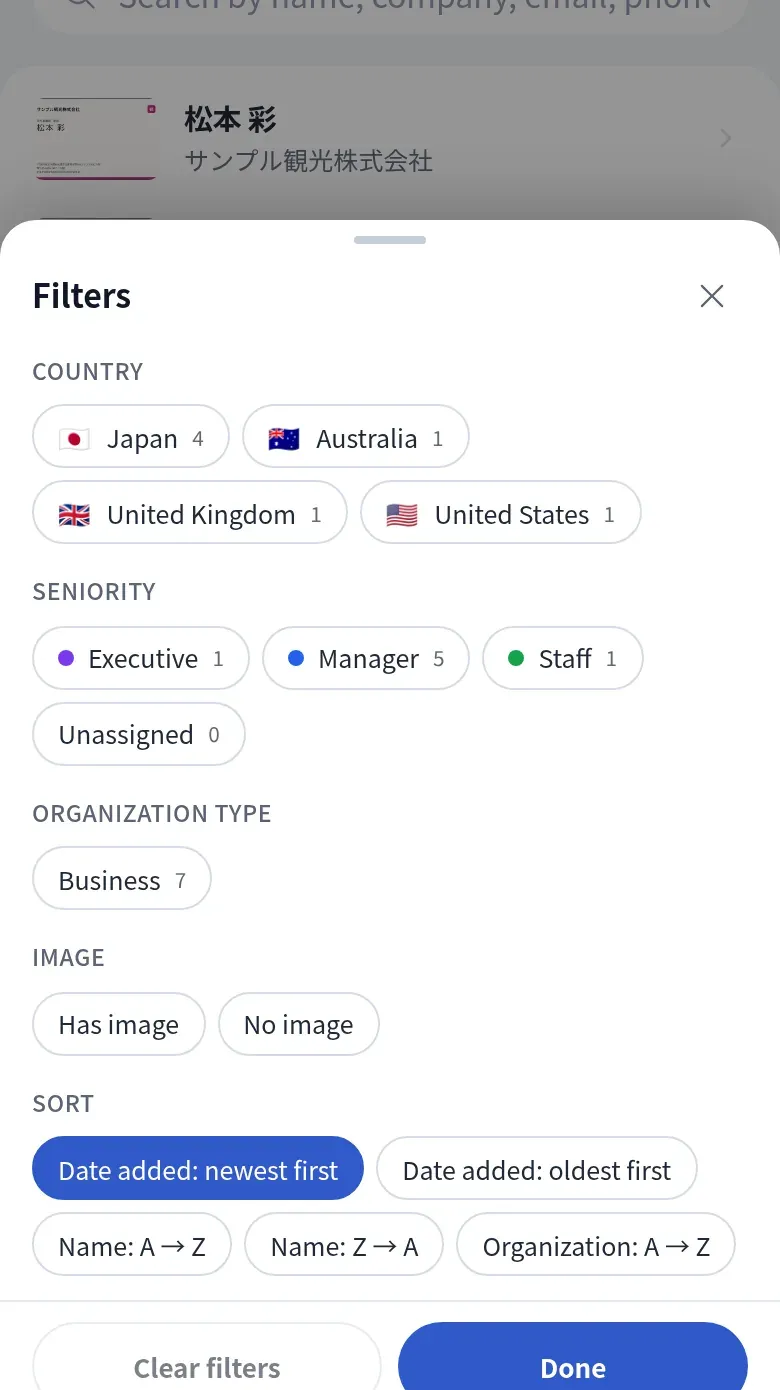
If you deal with many Japanese companies, it helps to filter contacts by seniority. In GenCard, the AI reads Japanese, English and Vietnamese cards and stores the job title in its own field. If you add the suggested Seniority set (Executive · Manager · Staff) with AI assigns on scan turned on, new cards are sorted into one of the three groups in the same AI call that reads the card, at no extra credit. Treat the AI’s choice as a suggestion and check it for important contacts. See how to set up contact groups for instructions.
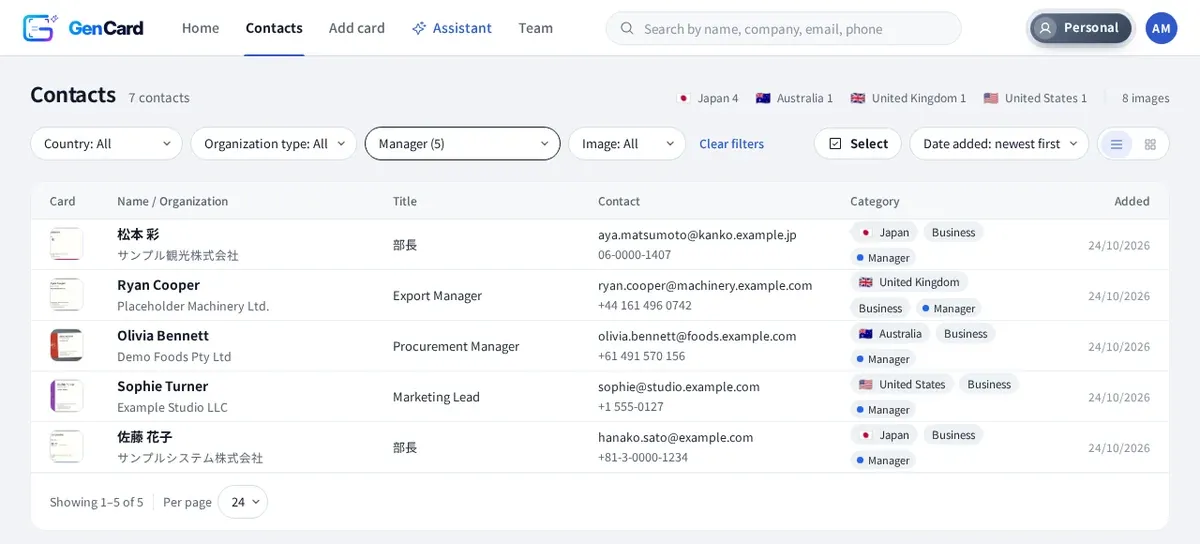
For cards with an English back, the Single card, both sides camera mode saves both sides as one card (camera scanning guide). The Free plan adds 10 AI credits a day; see the pricing page for other plans.
FAQ
Is a bucho more senior than a kacho?
In a typical company, yes. 部長 (buchō) runs a department, and 課長 (kachō) runs a section within it. A department may contain several sections.
Is a shunin a manager?
Usually not. 主任 often marks an experienced staff member or the main person in charge of an area; some companies give a shunin a small team. Look at the department and ask if it matters.
Should I call my Japanese client by their title?
Family name + さん is widely used in conversation with people from other companies, while 山田部長 is more common inside their own company. In formal settings, follow how your colleagues or the person who introduced you address them.